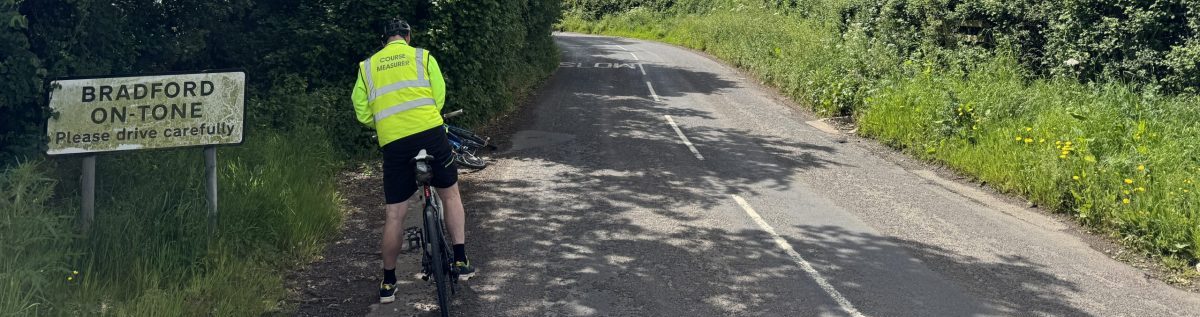
Measurers work for the Race Director as independent agents and are selected and engaged by the Race Director. They submit their measurement reports to the Measurement Secretary for certification with a copy to the Race Director. Charges and expenses for the measurer’s services are a matter for agreement between race organisers and the measurer and should be discussed at the first contact. It is preferable to check the status of the race organiser, whether the race is “for profit” or “not for profit”. “For profit” organisations should not benefit from non-commercial terms course measurement.
Measurers should provide race organisers with an estimate of likely charges, detailing travel costs, meals, and other expenses.
The following revised guidelines have been agreed by the Course Measurement Working Party for measurements in the UK and apply to races organised by affiliated athletic and running clubs. They apply from 1 February 2026.
Measurers, can of course, offer a discount either in the form of discounted lower fee or donation to a race charity. This might be due to the charitable status of a race, the small size of an event or other hardship of the race organiser.
Time to complete a measurement
The hours total should include calibration time, travel time, time measuring the course and time competing the measurement report.
Travel and subsistence
Travel by car should not be charged at a rate higher then the maximum HMRC mileage rate for tax year 2025/2026, of 45p per mile.
Travel by public transport will be charged at cost. Use of taxis should be agreed with the race organiser in advance. Measurers travelling to and from the measurement by bicycle may claim a contribution to the maintenance costs of the bicycle.
Where the location, duration or timing of the measurement requires, the measurer may claim the reasonable cost of meals and accommodation. Alternatively, the race organiser may, with the agreement of the measurer, provide these.
Other Items
In addition, the measurer may charge for items purchased specifically for the measurement, e.g. maps, paint.
This table shows approximate estimated effort for a range of common distances:
| Distance | Hours |
| 5K | 8-hours |
| 10K | 8 – 12 hours |
| Half Marathon | 12 – 16 hours |
| Full Marathon | 12 – 24 hours |
If charging an hourly rate, measurers should include:
* time spent prior to the measurement in such as discussions, mapping, emails etc.
* time spent from leaving home to undertake local calibration or departure time to location to create a calibration line, through to conclusion of post measurement calibrations/ return home.
* time spent on report production and issuing to the customers’ requirements.
Where measurement need to be undertaken at night, an uplift of 50% of the hourly rate should be applied.